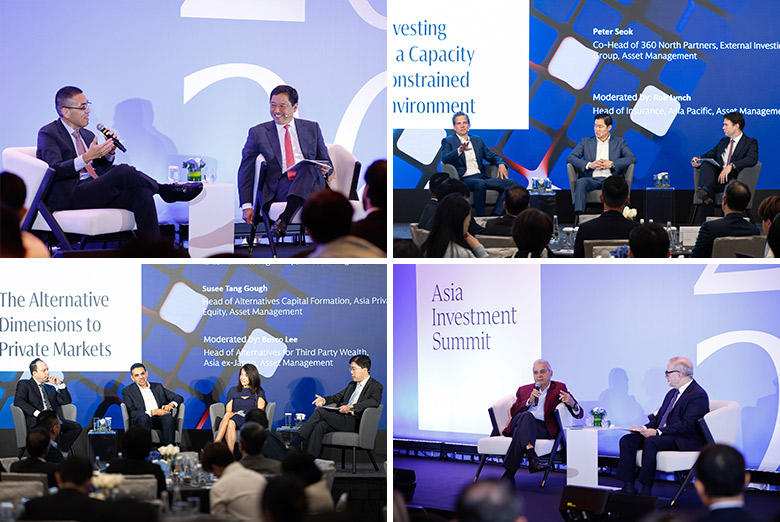
Asia Investment Summit 2026: Navigating a Changing World
Geopolitics: No Longer a Tail Risk for Investors
Geopolitics is the primary driver of structural transformation across markets, industries, and capital flows. From the Middle East conflict’s impact on energy and global growth, to the intensifying US-China strategic rivalry, to the fierce contest for AI supremacy, geopolitical forces are reshaping trade flows, supply chains, defense spending, and even global power.
For investors, geopolitics can no longer be treated as a tail risk to be managed at the margins. The key investment implication is to position portfolios to favor companies winning within their own trading spheres and be cautious of businesses with cross-border revenue models vulnerable to geopolitical disruption.
The AI Opportunity
Capex commitments from hyperscalers remain enormous. For investors, it is important to understand where the AI exposure in portfolios lies and consider business model and obsolescence risks. The opportunity lies in second and third-order beneficiaries, companies in power infrastructure, optical networking, and data center construction that may have yet to fully price in their AI exposure.
Critically, AI is also reshaping the investment process, with quantitative strategies now capable of evaluating more research ideas than before, expanding the opportunity set for alpha generation. The AI cycle remains in its early stages, and we believe the trend has the potential to be stronger for longer than many anticipate.
A New Macro Regime for Investors
The current macro backdrop has held up better than expected though investors will have to contend with a new macro regime characterized by structurally higher inflation, sticky interest rates, and elevated dispersion between asset class winners and losers. First, the traditional 60/40 portfolio and reliance on bonds as a ballast require modernization. The addition of hedge funds has enabled meaningful outperformance of 60/40 portfolios in recent years, with only a fraction of the volatility.1
Second, this provides fertile ground in which active management, alternative assets, and skill-based alpha strategies thrive.

Income as a Ballast During Volatility
Income can serve as a powerful ballast in this environment, with high-quality assets across the globe currently offering yields of around 5 to 6%2. We see strong income potential in bank debt and securitized assets. Investors should focus on quality and consistency of income rather than reach for yield in riskier parts of the capital structure.
Capturing Value Across Alternatives
The macro backdrop has proven more resilient than many anticipated, creating an opportunistic moment for alternatives. Private equity offers scalable platforms that drive sustained value creation, while private credit captures contractual income with meaningful downside protection at attractive spread levels. For those seeking liquidity solutions, secondaries provide embedded de-risking capabilities, and hedge funds offer the potential for downside protection in volatile conditions.
1 Source: Goldman Sachs Asset Management, as of March 2026.
2 Source: Goldman Sachs Asset Management.