Dual Engines: Combining Fundamental and Quantitative Equity Approaches in Portfolios




Key Takeaways
Fundamental and Quantitative Equity Investing Approaches
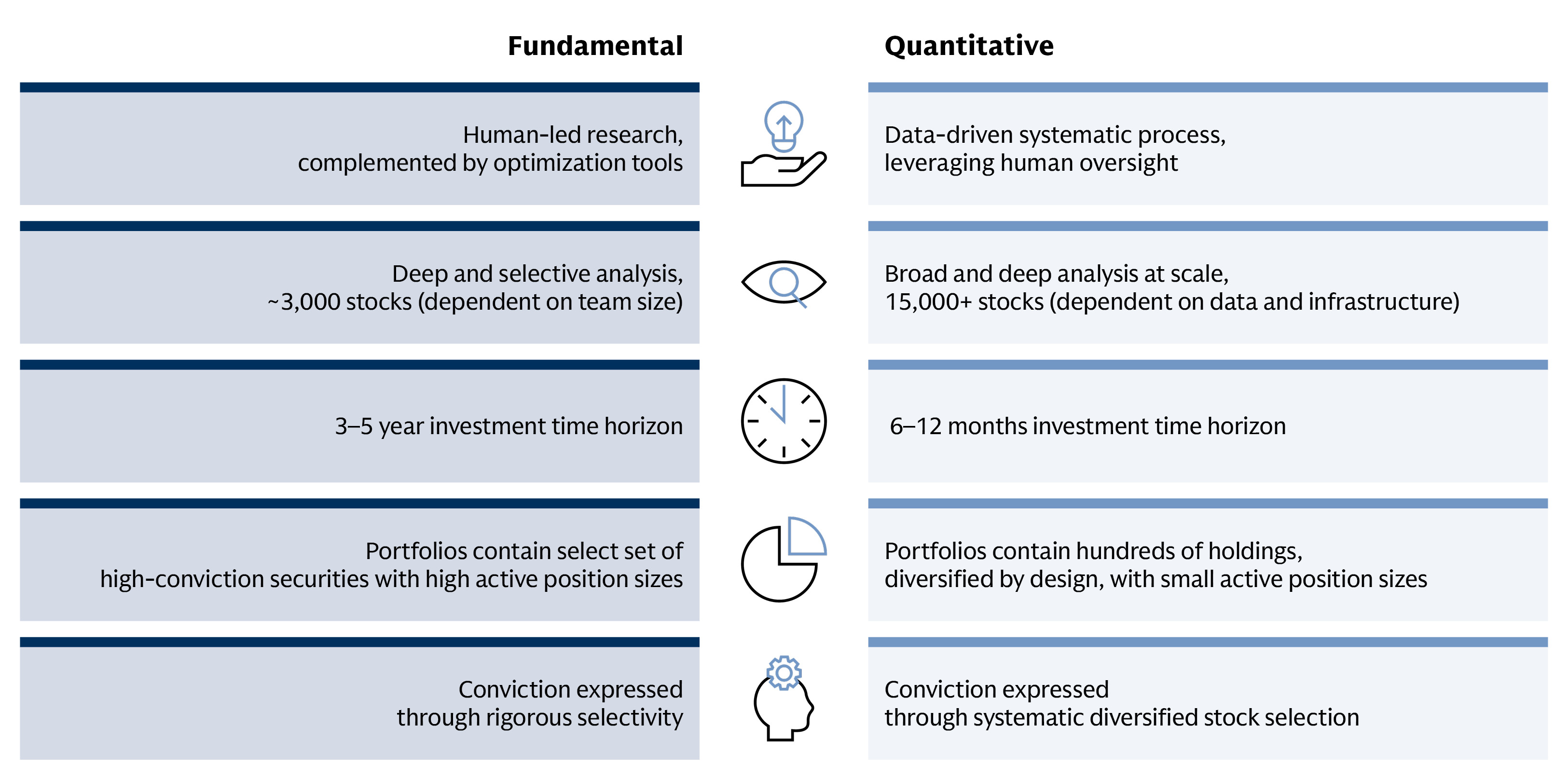
Before exploring how fundamental and quantitative equity strategies complement one another, we believe it is key to understand how these two investment approaches are different.
Source: Goldman Sachs Asset Management.
Fundamental investing leverages human-led research to analyze company financials, competitive strengths, and management quality. By embedding teams locally and engaging not only with a company’s multiple layers of management but also directly with that company’s ecosystem, including suppliers and competitors—fundamental equity managers can seek an information edge, particularly where data is scarce or unreliable. This selective, high-conviction, human-led approach focuses on idiosyncratic, sometimes off-benchmark opportunities to identify businesses that appear well positioned to compound value over time.
Fundamental approaches tend to be more concentrated than quantitative approaches, with larger active position sizes and greater deviations from the benchmark. Risk is managed through continuous review and debate, with portfolio manager oversight of sector, industry, quality, and market cap exposure. Conviction is expressed through rigorous selectivity and a disciplined human review process underpinned by a continuous cycle of debate regarding both owned and unowned names backed by deep and ongoing company-specific research. Fundamental managers can also leverage advanced portfolio optimization tools to supplement manager conviction with rigorous risk-modeling. These tools help managers build balanced portfolios and control unintended exposures. The overall goal of fundamental approaches is to have stock-specific insights, rather than broad market trends or sectoral exposures, drive long-term returns.
Quantitative investing leverages large-scale data analysis to drive systematic stock selection insights with the help of advanced techniques including AI. By integrating manager insights with massive datasets—including fundamentals, consumer activity, investor behavior, sentiment, and news flow—quant models can evaluate thousands of stocks simultaneously. The scalability of a systematic approach enables daily, broad coverage of the investment universe. This allows managers to complement long-term fundamental views with real-time insights into possible stock attractiveness, while accounting for how macro conditions and market regimes may influence near-term returns.
More diversified by design, long-only quantitative approaches often aim to keep a beta of 1 (benchmark-like market exposure) and take a larger number of smaller active bets across a broad set of pockets of the market. Risk is managed systematically by controlling exposures with precision and aiming to ensure every trade’s alpha potential exceeds risk and transaction cost implications. Conviction is expressed through the design of a systematic process that derives insights from large pools of data on an ongoing basis, underpinned by a continuous cycle of model enhancements backed by fresh factor research. The overall goal of quantitative approaches is to build broad, diversified, benchmark-aware portfolios that prioritize numerous small bets over concentrated positions, seeking precise control over style, sector, and geographic exposures.
Importantly, the distinction between fundamental and quantitative investing is not always binary. In practice, a number of managers could incorporate elements of both investment approaches by combining fundamental stock selection with systematic portfolio construction and risk management tools. Quantitative managers also vary widely in their investment philosophies and methodologies. Some managers ground their systematic models in economic and fundamental reality. For instance, factor investing or smart beta approaches target fundamental characteristics like value and quality. At the other end of the spectrum are strategies that have little to no grounding in fundamental business analysis and rely purely on mathematical models and statistical patterns.
For the purposes of the following analysis, to ensure consistency with available eVestment universe classifications, we have grouped managers into “Fundamental” and “Quantitative” categories. However, we recognize that hybrid approaches may be valuable, and that a robust manager selection process should include a deeper evaluation of how these elements are incorporated into the investment process.
The Potential Advantages of Combining Fundamental and Quantitative Approaches
Our analysis suggests that integrating fundamental and quantitative equity strategies may create a structural portfolio advantage that is greater than the sum of its parts. This advantage stems from four reinforcing dynamics, which we explore below:
- Complementary performance across different market regimes
- Structurally low-to-negative correlations
- Alpha compounding via elevated information ratios
- Flexibility in selection, style expression, and sizing
Complementary performance across different market regimes
A selection of recent market stress events highlights how fundamental and quantitative investment approaches may exhibit complementary performance patterns depending on the nature of the underlying market shocks. Approaches typically associated with quantitative investing appeared relatively well-positioned during broader macro or policy-driven rotations, while fundamental approaches appeared relatively resilient during certain idiosyncratic episodes. This pattern supports the potential diversification benefits of maintaining a balanced allocation across both approaches over the market cycle.
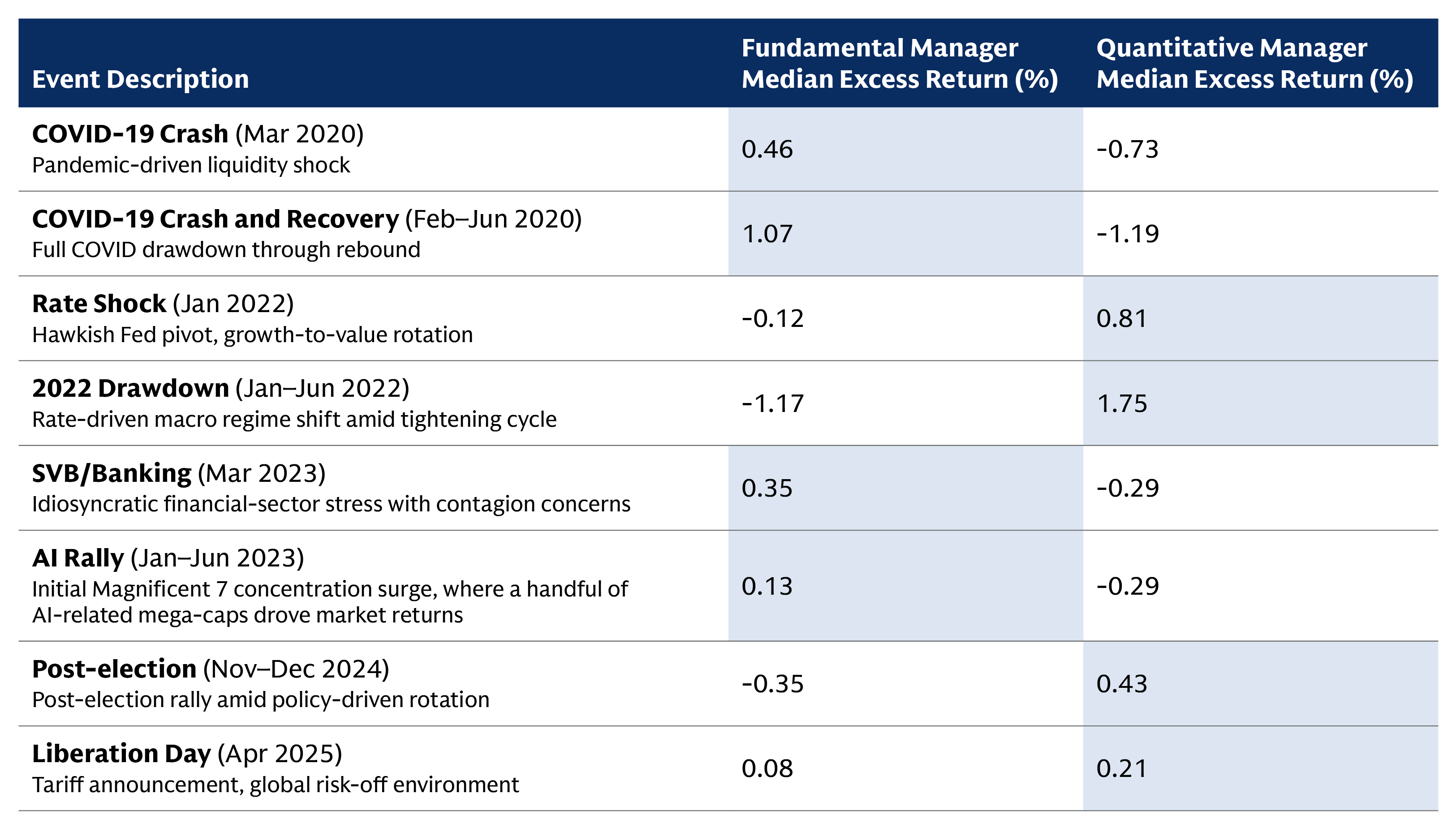
Source: eVestment. Data as of December 31, 2025. Excess returns are net of fees (eVestment peer estimate, $100M SMA). Cumulative excess return is computed per manager by compounding portfolio and benchmark returns separately over the window, then taking the median across managers and a simple average across the seven asset classes; managers without a full track record over the window are excluded.
Market structure may help explain why each approach performs when it does. Dispersion is a prerequisite for active management, but it is not sufficient on its own—the degree of market concentration matters just as much. Today's large-cap equity markets combine decent dispersion with high concentration. In a highly concentrated market, a manager targeting a specific level of tracking error relative to the benchmark faces a structural choice: either take larger size and factor bets or hold a greater number of stocks to assemble smaller, diversifying bets that aggregate to a target tracking error.
Quantitative approaches may be better suited to diversifying bets that aggregate to a target tracking error, given their ability to systematically cover and evaluate a far broader set of securities. This may help explain why quantitative strategies have performed well across much of the universe in recent years. On the other hand, the fundamental long-only managers can mitigate equity market concentration by enforcing strict individual position limits, such as capping any single holding at 5% of the total portfolio, alongside establishing sector and factor exposure thresholds to prevent unintended thematic clustering. Portfolio managers can also tilt allocations toward mid-cap equities to decrease dependency on mega-cap performance drivers. By comparison, other approaches that are less able to achieve the same kind of breadth may require longer investment horizons to realize return potential, given the higher tracking error.
The complementary nature of fundamental and quantitative approaches is most evident across shifting market regimes, historical periods, and geographies, particularly when examining the wide distribution of manager returns within a given universe. Because a top-quartile manager can significantly outperform while a bottom-quartile manager underperforms in the same environment, how investors select and combine individual managers is just as critical as the initial decision to blend these styles.
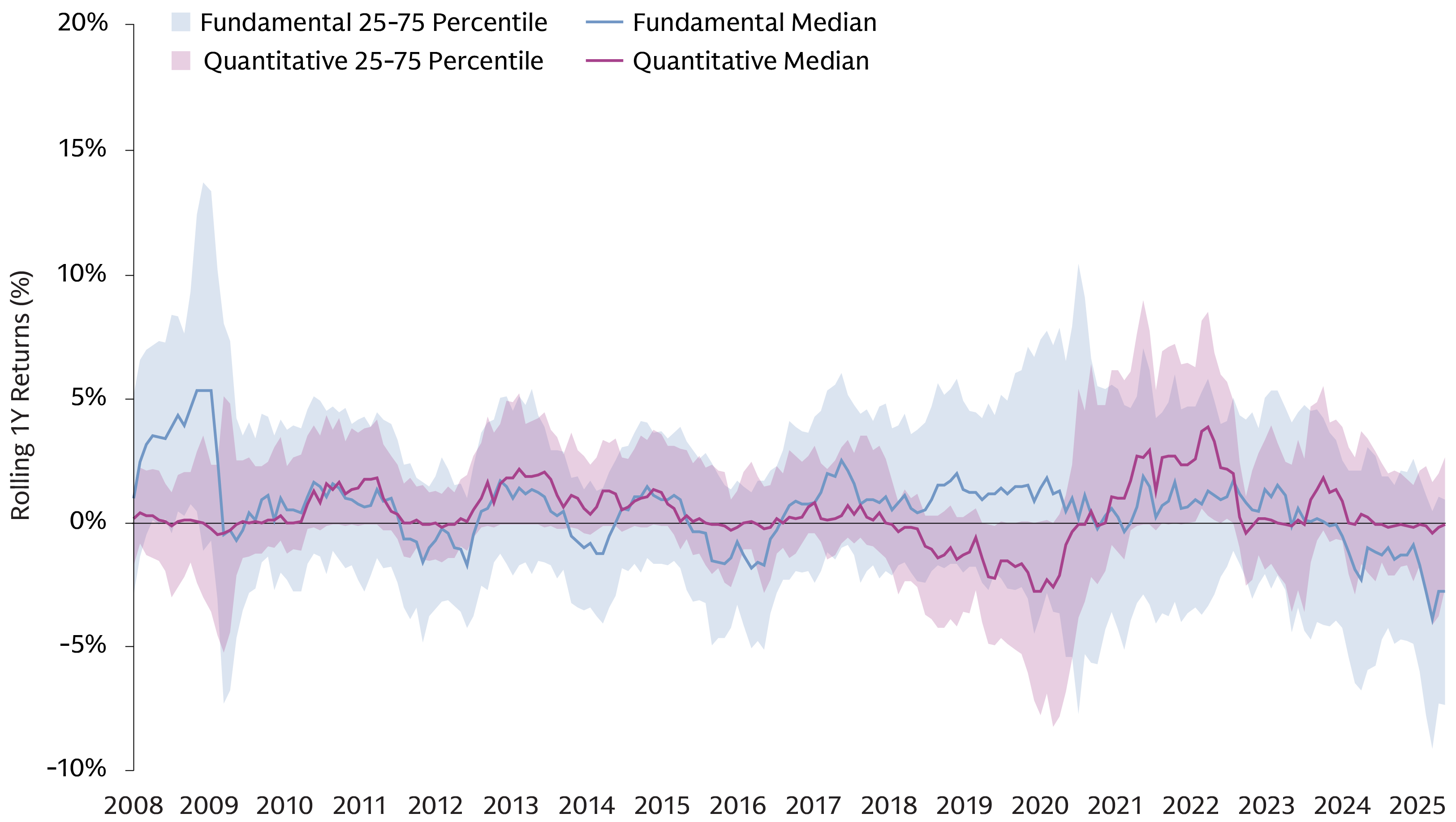
Source: Goldman Sachs Asset Management, eVestment. Based on analysis of 430 fundamental and quantitative managers within US equities. As of May 29, 2026. Past performance is not indicative of future results, which may vary.
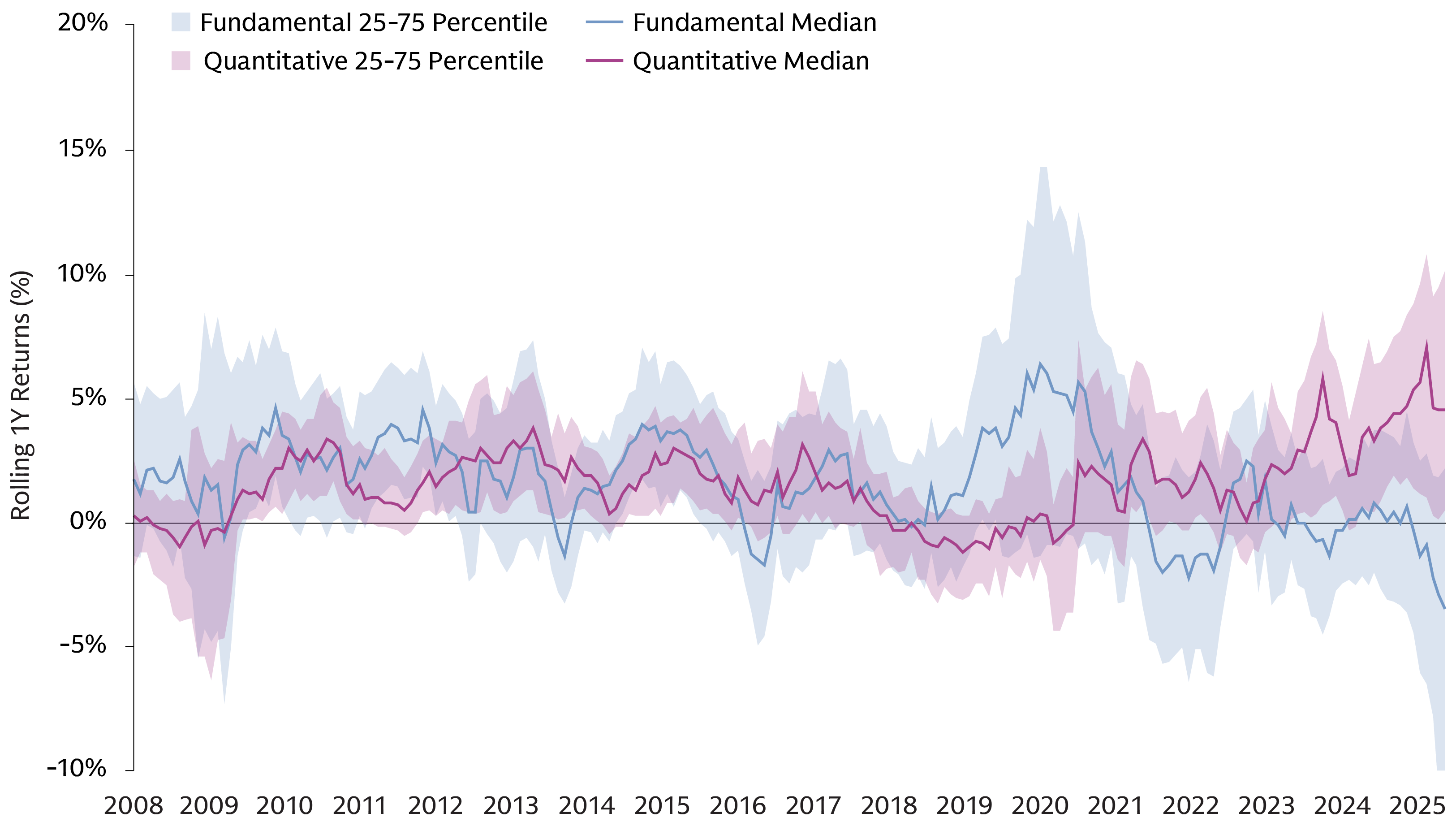
Source: Goldman Sachs Asset Management, eVestment. Based on analysis of 731 fundamental and quantitative managers within global ex-US equities. As of May 29, 2026. Past performance is not indicative of future results, which may vary.
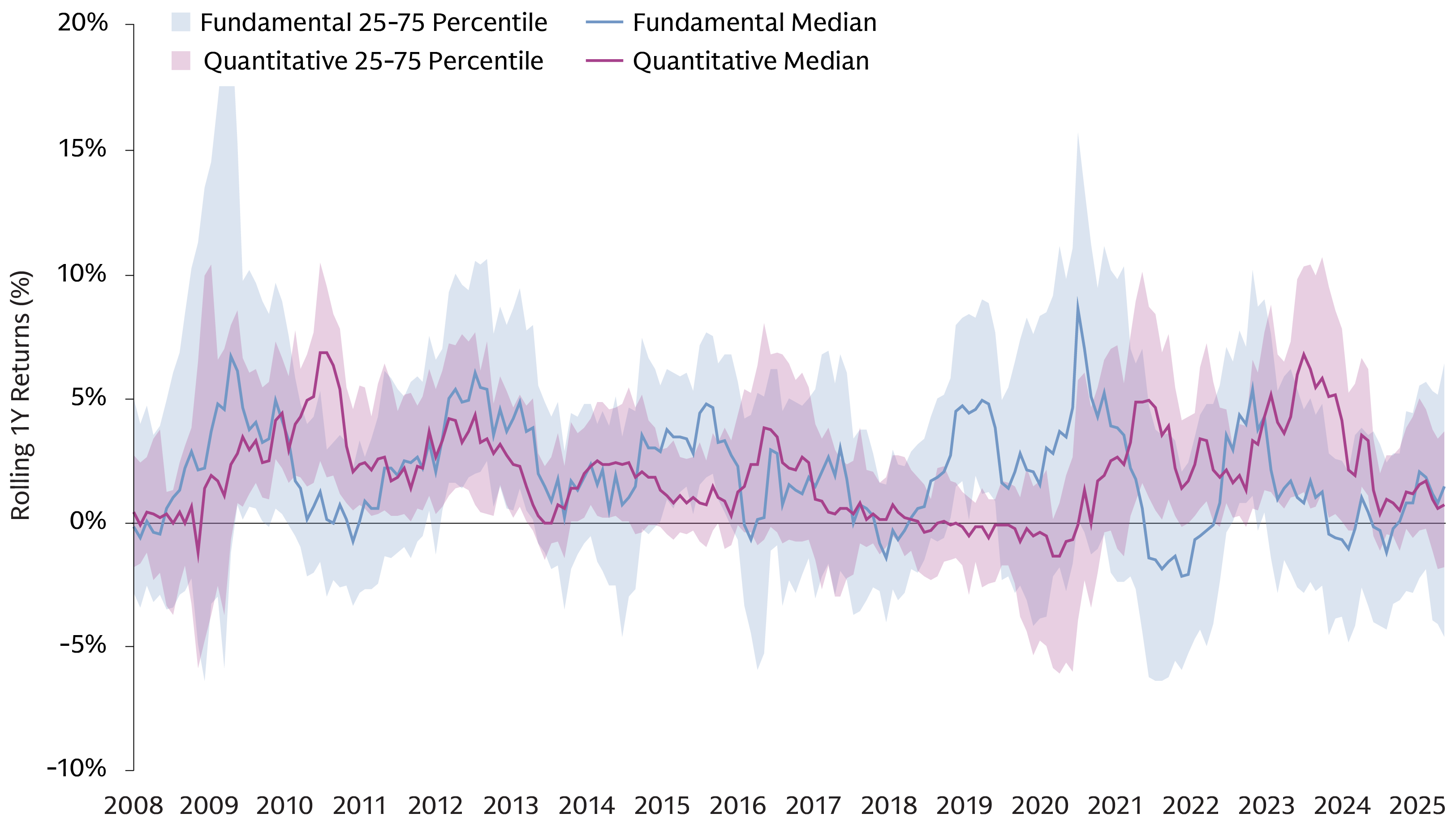
Source: Goldman Sachs Asset Management, eVestment. Based on analysis of 581 fundamental and quantitative managers within EM equities. As of May 29, 2026. Past performance is not indicative of future results, which may vary.
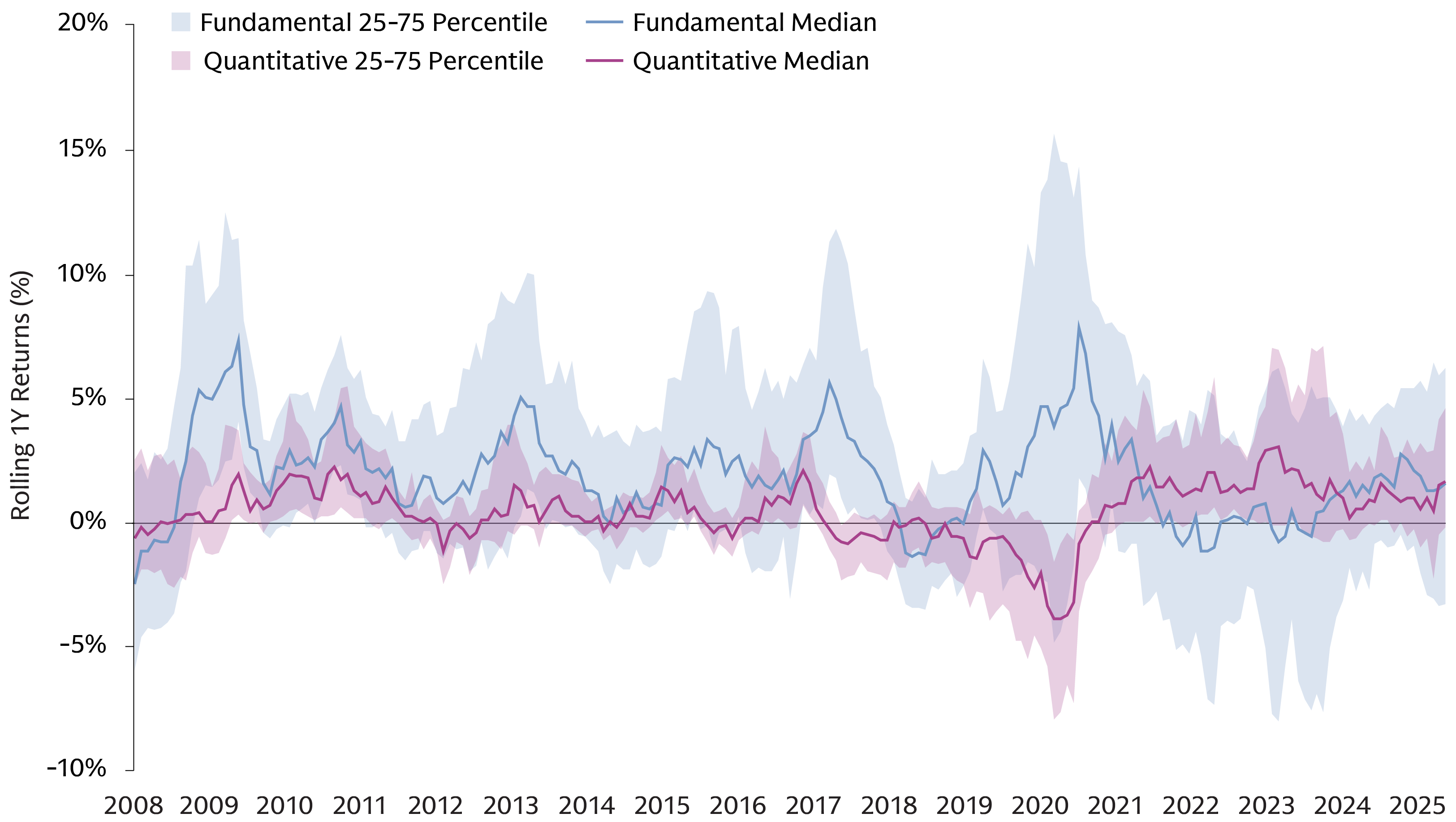
Source: Goldman Sachs Asset Management, eVestment. Based on analysis of 379 fundamental and quantitative managers within Japan equities. As of May 29, 2026. Past performance is not indicative of future results, which may vary.
Structurally low-to-negative correlations
Correlations between fundamental and quantitative managers are consistently low (and in many cases negative) because the two styles operate on different timeframes and generate alpha from structurally independent, often opposing sources. This is the case across developed markets, emerging markets, and global ex-US universes, and it persists across the full performance distribution, from top-quartile outperformers (where correlations are negative, ranging from -0.11 to -0.41) to bottom-quartile underperformers (where correlations remain a modest 0.21 to 0.27). When managers with low or negative correlations are combined in a portfolio, the resulting volatility is reduced because their returns do not move in lockstep.
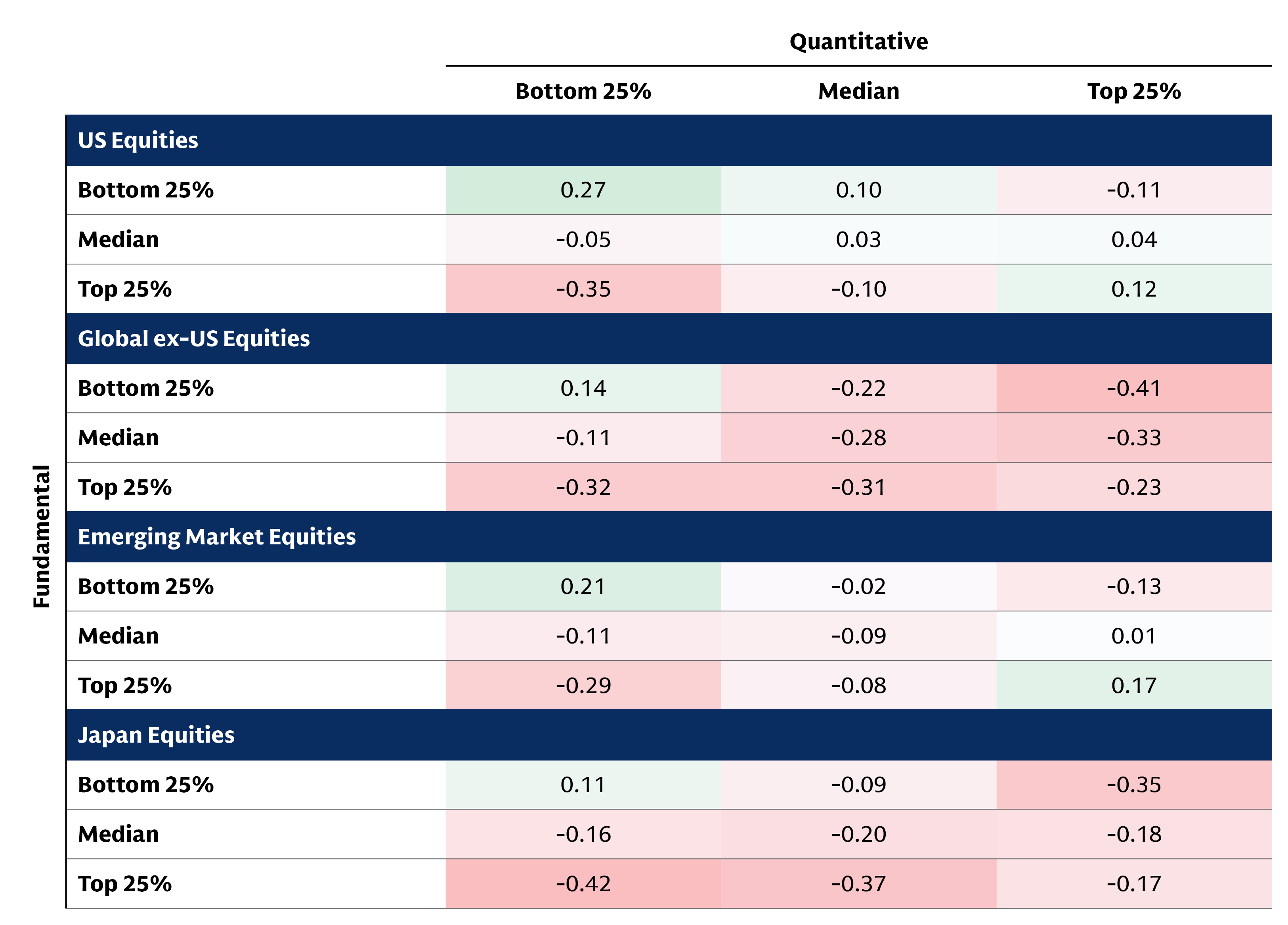
Source: Goldman Sachs Asset Management, eVestment. Based on time-series correlations of monthly 1Y rolling Excess Return data from December 2008 to December 2025. Past correlations are not indicative of future correlations, which may vary.
Additionally, both fundamental and quantitative managers have maintained relatively moderate pairwise correlations over the long term, indicating that diversification benefits may exist both across and within approaches. This reinforces the portfolio construction case for maintaining a balanced allocation, as differentiated alpha sources and implementation techniques can reduce reliance on any single manager or style outcome.
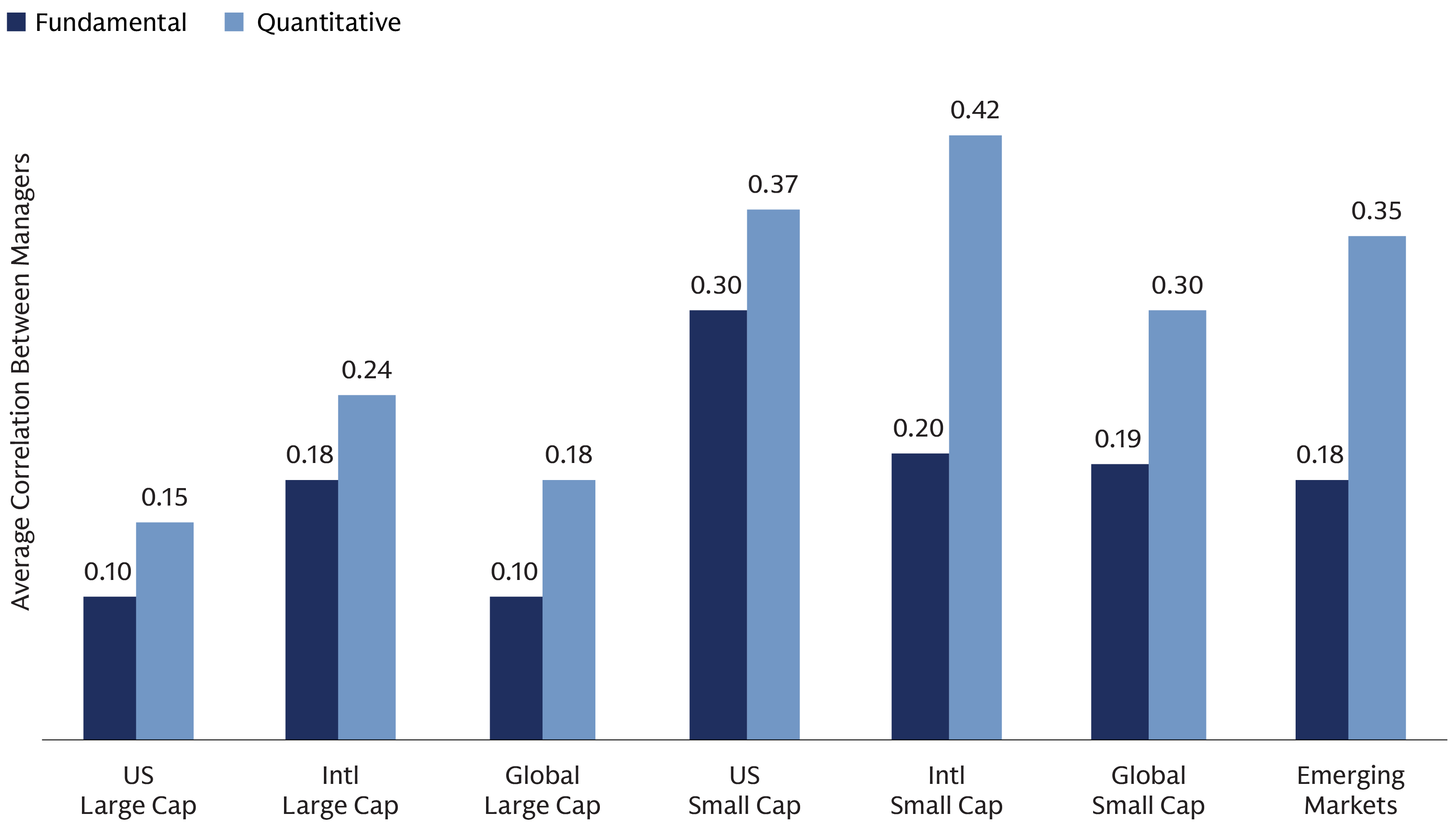
Source: eVestment. Correlation analysis is based on pairwise correlations of managers’ monthly excess return, over the time period from December 31, 2013, to December 31, 2025. Past correlations are not indicative of future correlations, which may vary.
Alpha compounding via elevated information ratios
Adding multiple managers with low correlation does not just have the potential to reduce volatility; it also has the potential to structurally elevate a portfolio's information ratio (a fund manager's ability to generate excess returns over a benchmark), making every unit of active risk work harder. This can be especially impactful in portfolios with higher levels of active risk. The lower the correlation between managers, the greater this information ratio enhancement becomes. Therefore, combining fundamental and quantitative approaches is not merely about making a portfolio less risky, it can be an offensive alpha-compounding strategy. However, adding more managers does not guarantee greater risk-adjusted returns. We find that benefits are contingent on maintaining low correlation; as manager correlation rises, there is a rapidly decreasing marginal benefit to adding more managers.
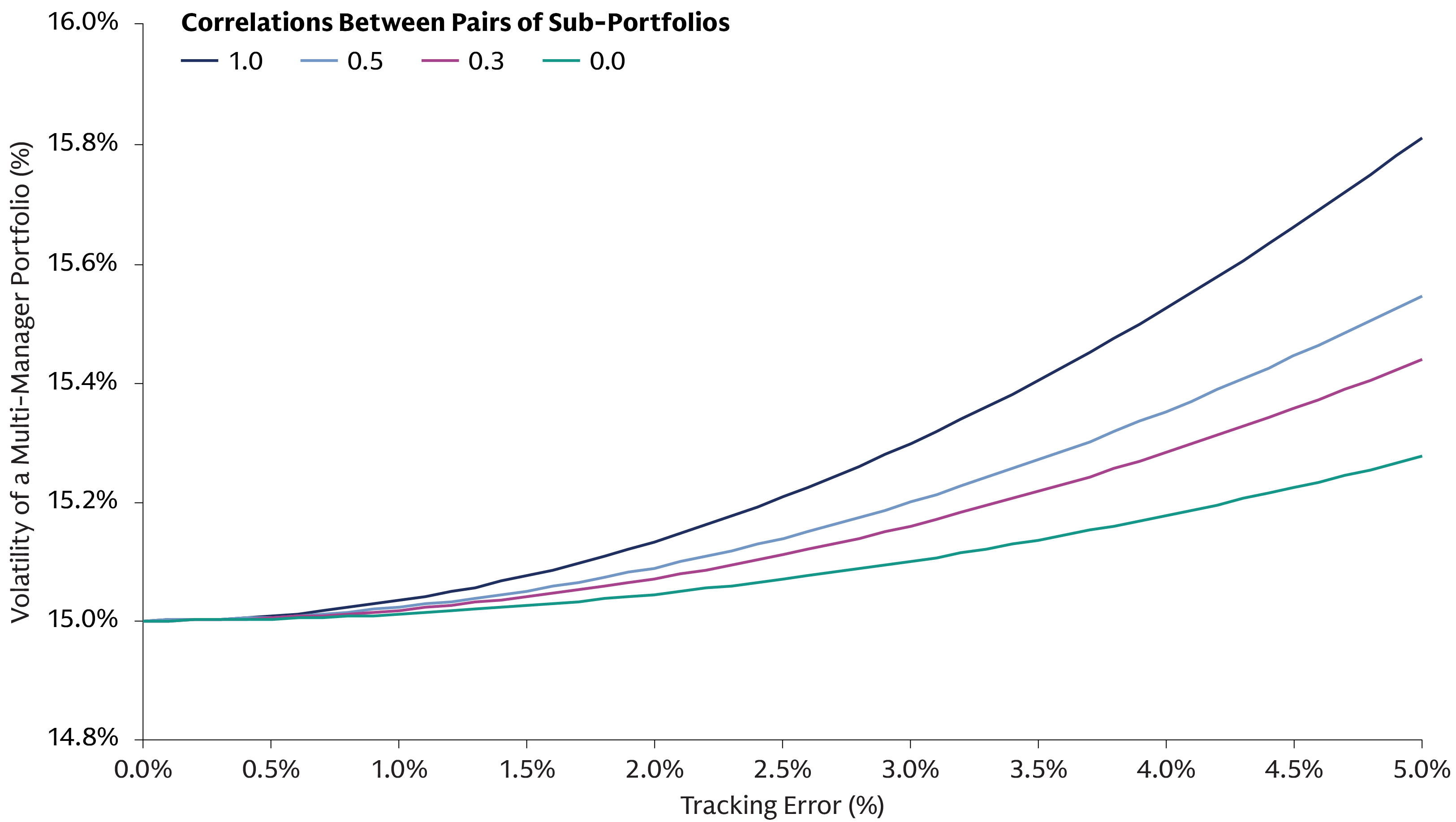
Source: Goldman Sachs Asset Management. As of March 2026. Volatility of a multi-manager portfolio comprising three equal-sized sub-portfolios vs. the tracking error of each individual sub-portfolios for varying correlations between pairs of sub-portfolios. The volatility of the benchmark is assumed to be 15%. The curve for perfectly correlated sub-portfolios (correlation equal to 1.0) is equivalent to an allocation to a single sub-portfolio with the indicated tracking error. Past correlations are not indicative of future correlations, which may vary.
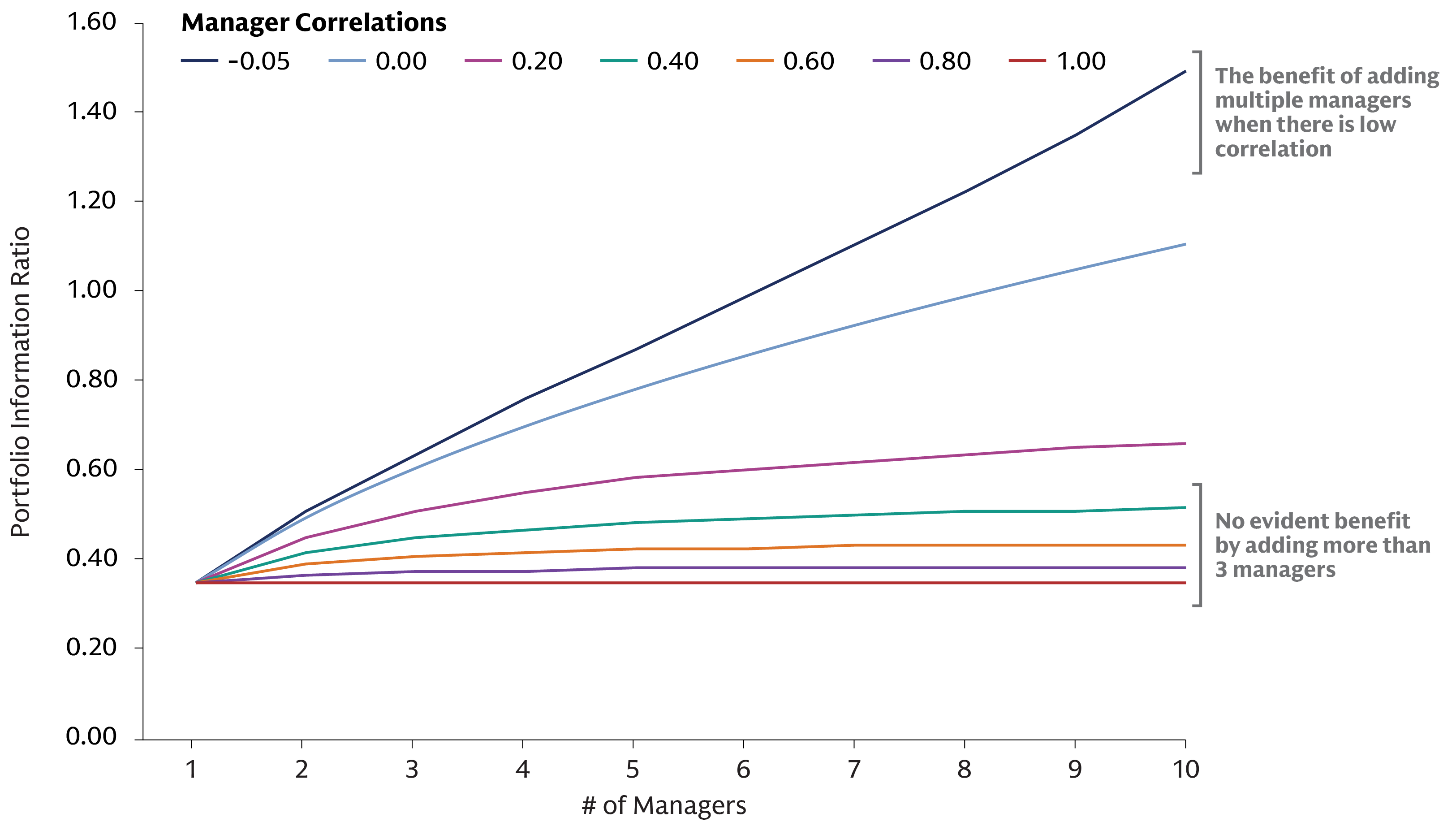
Source: Multi-Asset Solutions. Illustrative analysis based on hypothetical assumptions, including manager tracking error of 3%, information ratio of 0.35, and varying manager correlations. Portfolio information ratios are calculated using a multi-manager diversification framework and do not represent actual performance. These examples are for illustrative purposes only and are not actual results. If any assumptions used do not prove to be true, results may vary substantially. Past correlations are not indicative of future correlations, which may vary.
Flexibility in selection, style expression, and sizing
Once the decision is made to combine both fundamental and quantitative approaches into portfolios, we believe investors should consider which managers to select, how many to include, and how to size the allocation to each. When selecting which and how many managers to allocate to, an initial consideration is their correlation profiles, considering that lower correlations may bring larger information ratio benefits as outlined, but also that as the number of correlated managers increases, there is a diminishing benefit from combining fundamental and quantitative approaches.
Moreover, one should consider the complementarity of style exposures across managers. A broader opportunity set across fundamental approaches may offer a wider range of options, including the ability to express value and growth styles. For instance, one may pair dedicated value- and growth-oriented managers to control the portfolio's overall value/growth exposure, or to express a view on style positioning. This flexibility in style expression may be yet another attractive point to seek a combination of distinct approaches, but also a key consideration in maintaining balanced allocations across approaches.
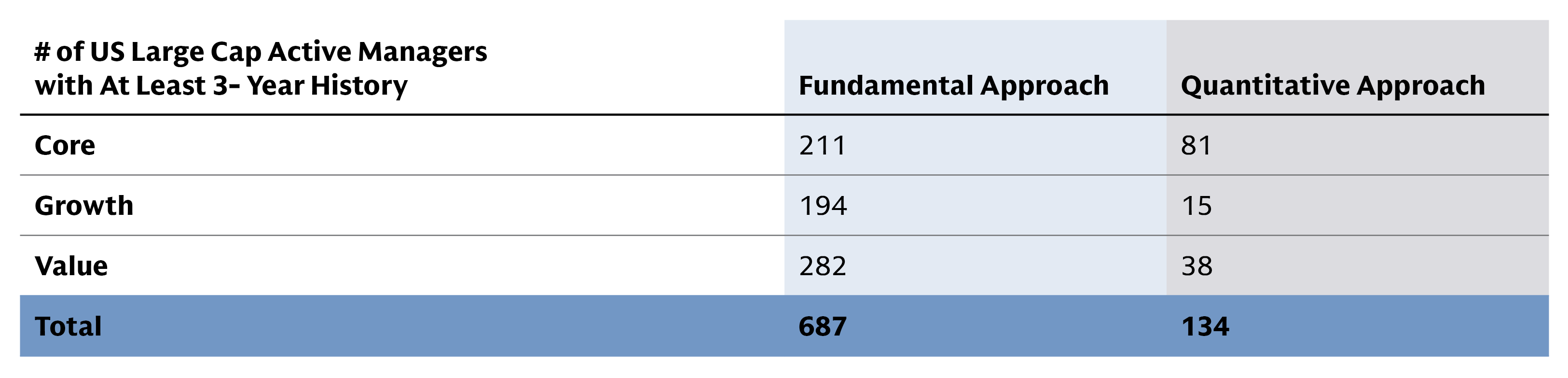
Source: eVestment. As of March 31, 2026. Above table summarizes, by eVestment universe, the number of active managers with a minimum three-year track record that are categorized as pure quantitative or pure fundamental investment strategies.
However, beyond examining their correlation and broad style profiles, determining how many managers to include also involves optimizing the portfolio to prevent rising operational costs, accounting for unequal levels of confidence in manager skill, and any secondary overlapping exposures across managers to unintended risk factors.
When determining how to size allocations across the selected managers, a common starting point is to allocate equal active risk across individual managers, calibrated to each manager’s expected tracking error rather than capital weights alone. Investors could examine risk factor exposure by starting with a value/growth balance before making refinements based on the conviction regarding which manager or style is better positioned for the prevailing environment.
Building a Resilient, Multi-Dimensional Portfolio
We believe framing fundamental versus quantitative investing as mutually exclusive choices misses an opportunity. As today's equity markets grapple with high concentration and rapid regime shifts, relying on a single investment philosophy also introduces unnecessary vulnerability. By integrating both approaches, investors transition from a one-dimensional strategy to a multi-dimensional portfolio framework. This combination seeks to bridge the gap between human-led depth—which we believe may help uncover idiosyncratic, high-conviction opportunities—and systematic breadth, which aims to provide scalable, real-time risk control, and a dynamic ability to capture evolving sources of alpha across thousands of securities.
Ultimately, we believe the potential benefit of combining fundamental and quantitative investing lies in their complementary nature. Their structurally low-to-negative correlations may not merely seek to defend a portfolio against market volatility; they may actively enhance the IR and provide the style flexibility required to navigate diverse market conditions over a full market cycle. We believe combining these dual engines of alpha generation may offer a robust and resilient path toward improved risk-adjusted returns.